Nut
Pistachio
A green tree nut rich in heart-healthy fats, fiber, and potassium that supports healthy cholesterol, blood pressure, and the heart.
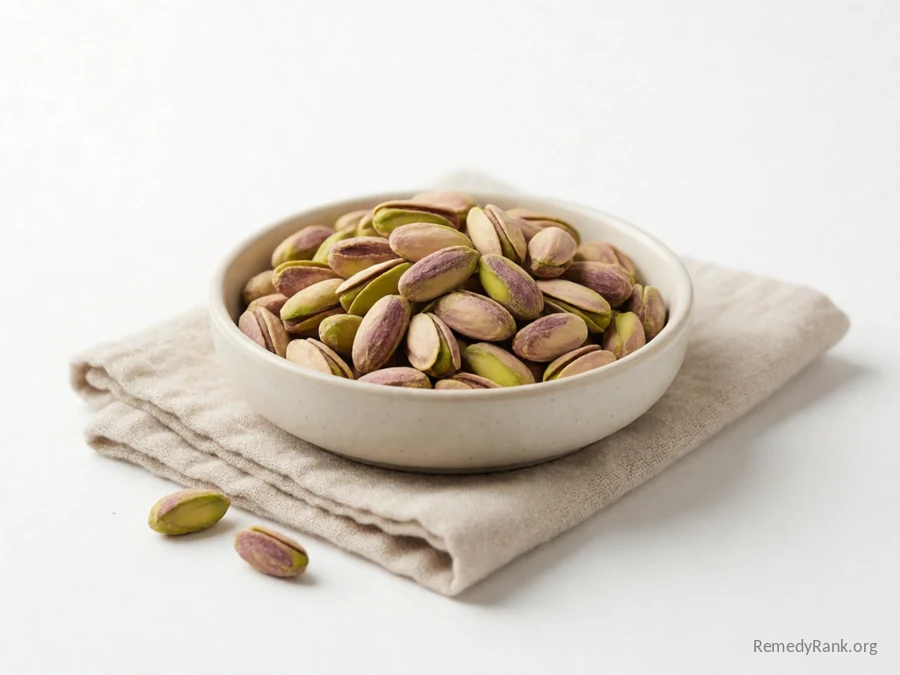 ⤢
⤢📊 How it ranks (our editor score) — 88/100Tap to see the breakdown
🌱 What it is
Pistachios are the seeds of a small tree that grows well in dry, sunny climates. Each nut hides inside a hard shell that splits open when ripe, revealing a green-and-purple kernel with a rich, slightly sweet flavor.
📜 Where it comes from
Pistachios have been eaten in the Middle East and Central Asia for thousands of years, with archaeological evidence placing them among the earliest cultivated nuts, and they are referenced in ancient Persian and biblical texts as a prized delicacy. They spread through trade to the Mediterranean and eventually the Americas, where large-scale cultivation began in the twentieth century. Their vivid green color and rich flavor have long made them a treasured nut.
✨ Why it's good for you
- May help support healthy cholesterol levels because of their unsaturated fats and fiber
- May help support steady blood pressure thanks to their potassium content
- Traditionally used to support lasting energy as a wholesome snack between meals
- May help support healthy digestion with their fiber content
🥗 Nutrition
Per 1 oz (28 g, about 49 kernels) · about 159 calories
- Protein 5.7 g
- Fiber 2.9 g
- Potassium 291 mg
- Unsaturated fat 11 g
- Vitamin B6 0.5 mg
Source: USDA FoodData Central
🥄 How to use it
Enjoy a small handful as a snack, sprinkle chopped over salads and oats, or stir into wholesome dishes.
How much: A practical food amount is a small handful, about a quarter cup of shelled nuts, on most days.
Why it works: Nutrition science points to pistachio's monounsaturated fats, fiber, and potassium as support for healthy cholesterol and blood pressure, consistent with research on nuts and heart health.
Show full details & how to prepare it
The pistachio is a small green tree nut that has been gathered and savored across the Middle East for thousands of years, its delicate flavor and cheerful color making it a treasured treat. Behind that pleasure is a genuinely heart-friendly little food.
Pistachios are rich in the good monounsaturated fats that help nudge cholesterol toward a healthier balance, along with fiber, plant sterols and a generous helping of potassium that together support the blood vessels and ease blood pressure. Because they take effort to shell and are so satisfying, a small handful tends to content the appetite rather than overrun it.
They are a wholesome and safe food for most people. As a tree nut they are off-limits to anyone with a nut allergy, and being rich they are best enjoyed unsalted and in a modest handful rather than by the bowlful.
Ways to prepare it
⚠️ Cautions
- They are a tree nut, so anyone with a nut allergy must avoid them entirely.
- Choose unsalted pistachios and keep to a small handful, as nuts are rich and calorie-dense.
📚 Learn more
🌿 Deeper natural detail
💬 Ask Remy about Pistachio
📚 Resource confidence
Based on mentions in health references
Your vote is saved. Source endorsement totals come from books and studies (+7 per book, +5 per article). You can change your vote anytime from this device.
💬 Comments & experiences
Share what worked for you — and reply or 👍 like the experiences that resonate. Comments get a quick review before they appear publicly, to keep things safe and honest. Please don't make medical claims.
💚 Have an experience to share? Create a free account to join the conversation — your words might be exactly what someone else needs. Reading is always open to everyone.
Know a remedy like this?
Share a structured suggestion and our team will review it for the site.
Suggest a similar remedy