Fruit
Peach
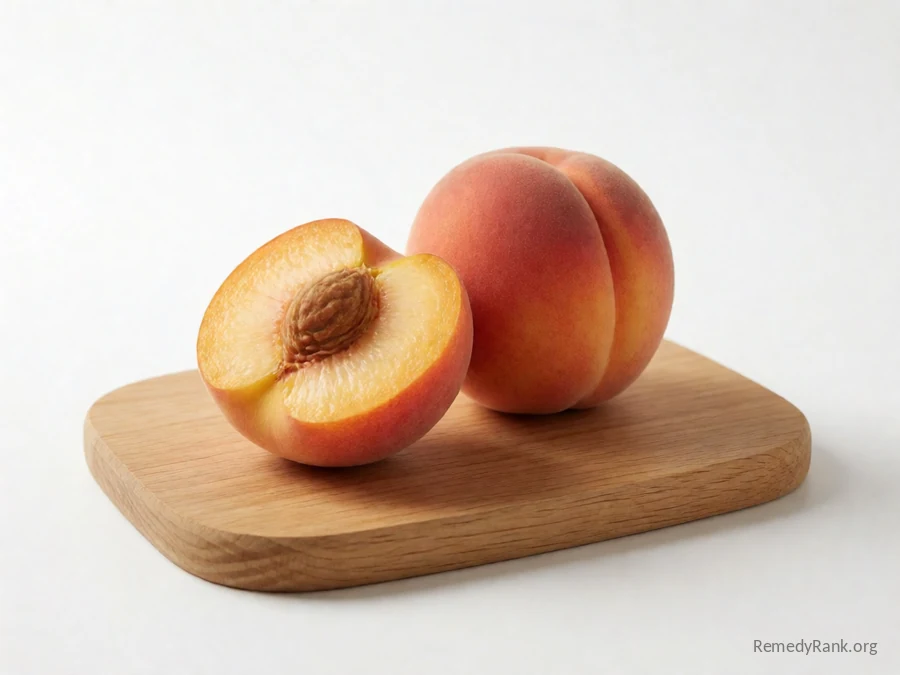
A soft, juicy summer fruit that hydrates, gently aids digestion, and feeds the skin with vitamins A and C.
 ⤢
⤢📊 How it ranks (our editor score) — 92/100Tap to see the breakdown
🌱 What it is
The peach is a soft, fuzzy-skinned summer fruit with sweet juicy flesh surrounding a hard central pit.
📜 Where it comes from
The peach originated in China, where it has been cultivated for thousands of years and holds symbolic meaning in traditional Chinese culture as a fruit of longevity. It traveled along the Silk Road to Persia, giving rise to its old European name, and from there spread into Mediterranean and eventually American orchards. Traditional diets across these regions valued the peach as a refreshing, digestible summer fruit.
✨ Why it's good for you
- may help support hydration with its juicy water content
- may help support digestion with gentle fiber
- may help support healthy skin with vitamins A and C
- may help support immune health as part of a balanced diet
🥗 Nutrition
Per 1 medium peach (150g) · about 58 calories
- Vitamin C 10.9mg
- Vitamin A 489 IU
- Fiber 2.3g
- Potassium 285mg
Source: USDA FoodData Central
🥄 How to use it
Eat ripe and fresh with the skin on, slice into oatmeal or salads, or stew briefly for a soothing dessert.
How much: A practical food amount is one to two fresh ripe peaches a day, eaten whole with the skin or added to meals.
Why it works: Nutrition science points to peach's water content and fiber as support for hydrationGiving your body enough water to work well. More → and gentle digestionHow your body breaks food down into pieces small enough to use for energy. More →, while its vitamin A and C are studied for nourishing the skin.
Show full details & how to prepare it
A ripe peach is mostly fragrant water wrapped around gentle fiber, which is exactly what makes it so refreshing and easy on the body. Cultivated for thousands of years, it is a fruit that satisfies a sweet craving while costing the body very little.
The fiber, much of it just under the skin, adds soft bulk that keeps digestionHow your body breaks food down into pieces small enough to use for energy. More → regular and helps you feel full on few calories. Peaches also carry vitamin C and the orange pigments that the body turns into vitamin A, both of which nourish the skin and help it stay supple and clear. Their high water content makes them quietly hydrating on a hot day.
The flesh is wholly gentle; the only thing to avoid is the hard stone in the center, whose inner kernel contains a natural cyanide-forming compound and should never be cracked open and eaten. Those minding their blood sugar can simply enjoy peaches in sensible portions, since very ripe fruit is naturally sweet.
Ways to prepare it
⚠️ Cautions
- The hard pit (stone) should never be cracked open and eaten — the kernel contains a natural cyanide compound.
- Very ripe peaches are high in natural sugar; those watching blood sugar should enjoy them in modest portions.
📚 Learn more
🌿 Deeper natural detail
🩺 The conventional view
💬 Ask Remy about Peach
📚 Resource confidence
Based on mentions in health references
Your vote is saved. Source endorsement totals come from books and studies (+7 per book, +5 per article). You can change your vote anytime from this device.
💬 Comments & experiences
Share what worked for you — and reply or 👍 like the experiences that resonate. Comments get a quick review before they appear publicly, to keep things safe and honest. Please don't make medical claims.
💚 Have an experience to share? Create a free account to join the conversation — your words might be exactly what someone else needs. Reading is always open to everyone.
Know a remedy like this?
Share a structured suggestion and our team will review it for the site.
Suggest a similar remedy