Herb
Red Clover
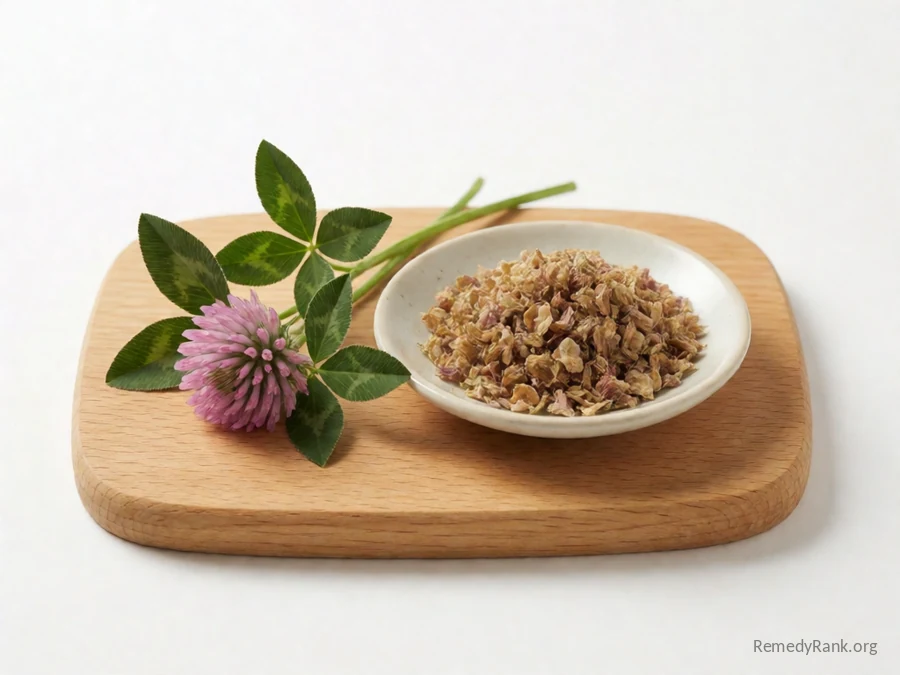
A common meadow flower rich in plant estrogens (isoflavones), traditionally used as a gentle tonic and for menopausal comfort.
 ⤢
⤢📊 How it ranks (our editor score) — 70/100Tap to see the breakdown
🌱 What it is
Red clover is a common meadow flower whose rosy blossoms are rich in plant compounds called isoflavones, traditionally steeped as a gentle tonic tea, especially around menopause.
📜 Where it comes from
Red clover grows wild across meadows in Europe, western Asia, and North America, and traditional herbalists, including 19th-century American eclectic physicians, steeped its blossoms as a general blood-purifying tonic and cough remedy. It also held a place in traditional women's health practice as a gentle tonic. Interest in red clover shifted in the 20th century toward its isoflavone content, plant compounds that resemble estrogen, once these were identified by researchers.
✨ Why it's good for you
- may help support comfort during menopausal changes
- may help support a sense of overall tonic well-being
- may help support healthy circulation as a traditional blood tonic
- may help support skin health in traditional folk use
🥗 Nutrition
Per 1 cup brewed tea (240ml) · about 2 calories
- Isoflavones (phytoestrogens)
- Flavonoids
- Negligible macronutrients
Source: Nutrition estimate (per typical serving)
🥄 How to use it
Steep the dried blossoms as a mild teaA warm drink made by steeping herbs in hot water. How to make a tea →, or take a standardized extract. A cup of the rosy tea is a pleasant, traditional way to use it.
How much: A common teaA warm drink made by steeping herbs in hot water. How to make a tea → is one to two teaspoons of dried blossoms steeped in hot water, up to twice a day. Standardized extracts follow their own labels.
Why it works: Supplies nutrients for bone formation.
Show full details & how to prepare it
Red clover is the cheerful pink flower that dots summer fields, and herbalists have long valued it as a gentle 'blood cleanser' and women's tonic. Its appeal today rests on isoflavones — plant compounds that act mildly like the body's own estrogen — which is why it is studied for easing menopausal hot flashes.
The evidence is modest and mixed, and because those same plant estrogens can affect hormone-sensitive tissues, red clover should be used thoughtfully and avoided by anyone pregnant, nursing, or with a hormone-related condition.
Ways to prepare it
⚠️ Cautions
- Its plant estrogens mean it should be avoided in pregnancy, breastfeeding, and hormone-sensitive conditions.
- It may add to the effect of blood thinners, so those taking them should be mindful of this.
📚 Learn more
🌿 Deeper natural detail
🩺 The conventional view
🔎 What this addresses
Where Red Clover fits into a condition's cause-and-symptom picture — some conditions it works on the root cause of, others it mainly soothes.
Works on the cause of
- Eczema — Used traditionally as a blood-cleansing tonic for skin conditions; there is no eczema-specific trial evidence.
💬 Ask Remy about Red Clover
📚 Resource confidence
Based on mentions in health references
Your vote is saved. Source endorsement totals come from books and studies (+7 per book, +5 per article). You can change your vote anytime from this device.
💬 Comments & experiences
Share what worked for you — and reply or 👍 like the experiences that resonate. Comments get a quick review before they appear publicly, to keep things safe and honest. Please don't make medical claims.
💚 Have an experience to share? Create a free account to join the conversation — your words might be exactly what someone else needs. Reading is always open to everyone.
Know a remedy like this?
Share a structured suggestion and our team will review it for the site.
Suggest a similar remedy