Mushroom
Chaga Mushroom
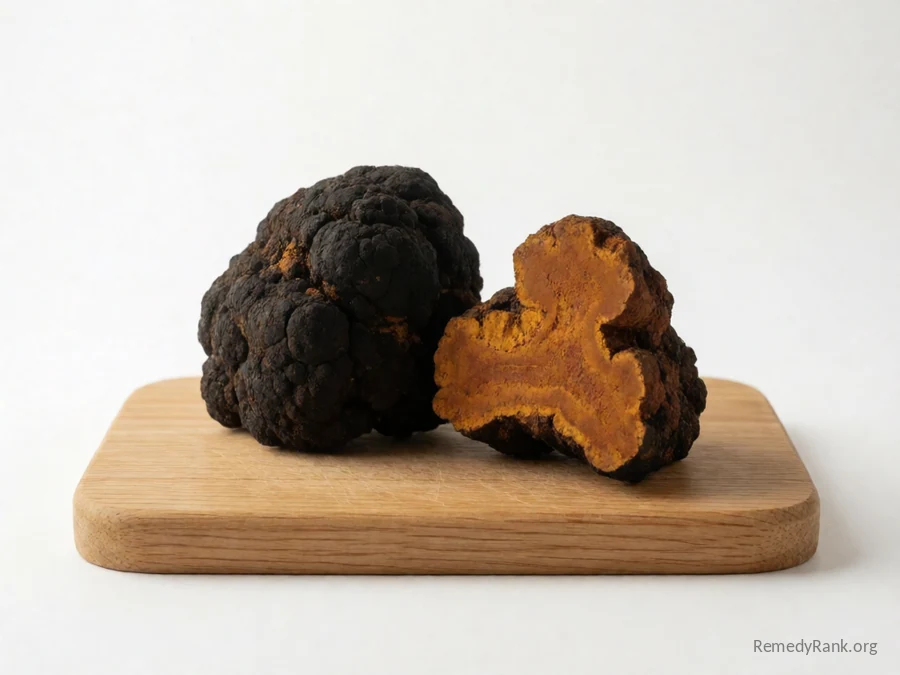
A hard, charcoal-like growth on birch trees, simmered into a dark tea and studied for its antioxidants.
 ⤢
⤢📊 How it ranks (our editor score) — 68/100Tap to see the breakdown
🌱 What it is
Chaga is a dense, clinker-like fungal growth (a "sclerotium," not a typical cap-and-stem mushroom) that forms on birch trees in cold northern forests, traditionally simmered into a dark, earthy tea.
📜 Where it comes from
Chaga is a hard, clinker-like fungal growth that forms on birch trees in cold northern forests, and it has a long folk history in Siberian, Baltic, and other northern European traditions, where it was simmered into a dark tea used as a folk remedy and a substitute for coffee or tea during scarcity. Russian and Scandinavian villagers traditionally gathered it from the forest. Interest in chaga spread more broadly in recent decades alongside wider interest in wild mushroom teas and their antioxidant content.
✨ Why it's good for you
- Very high in antioxidant compounds
- May help support healthy immune function
- Traditionally used as a slow, warming daily tonic
- May help support healthy inflammation levels
🥗 Nutrition
Per 1 tsp dried chaga powder (2g) · about 5 calories
- Trace fiber
- Antioxidants (melanin, polyphenols)
- Typically taken as tea, not eaten as a portion
Source: General estimate... chaga is almost always brewed as tea, not eaten
🥄 How to use it
Simmer small dried chunks or powder in water for 20-30 minutes to make a teaA warm drink made by steeping herbs in hot water. How to make a tea →; use in moderation as a daily tonic rather than a large single dose.
Why it works: Researchers attribute chaga's antioxidantA helpful substance in colorful fruits and vegetables that protects your cells from everyday wear and tear. More → reputation to its dense concentration of plant pigments and phenolic compounds, thought to help neutralize everyday oxidative stress in the body.
⚠️ Cautions
- High in oxalates, so those prone to kidney stones should be cautious and avoid high doses; may thin the blood, so use caution with blood-thinning medication or before surgery; may affect blood sugar in those with diabetes. Avoid in pregnancy and breastfeeding, and with autoimmune conditions, without medical guidance. Only use chaga from a trusted, expert-identified source.
📚 Learn more
🌿 Deeper natural detail
🩺 The conventional view
Curated links coming for this one.
💬 Ask Remy about Chaga Mushroom
📚 Resource confidence
Based on mentions in health references
Your vote is saved. Source endorsement totals come from books and studies (+7 per book, +5 per article). You can change your vote anytime from this device.
💬 Comments & experiences
Share what worked for you — and reply or 👍 like the experiences that resonate. Comments get a quick review before they appear publicly, to keep things safe and honest. Please don't make medical claims.
💚 Have an experience to share? Create a free account to join the conversation — your words might be exactly what someone else needs. Reading is always open to everyone.
Know a remedy like this?
Share a structured suggestion and our team will review it for the site.
Suggest a similar remedy